Dating App Development — AI-Powered Matchmaking App MVP Case
An AI-powered dating app MVP with transparent user matching algorithms, secure real-time chat, swipe-based discovery, and privacy-first monetization.

Overview
Amor’s Secret started with a simple but important question: can a dating application be both intelligent and trustworthy at the same time? The goal was not to reinvent dating, but to build a dating app MVP that feels modern, safe, and easy to trust. From day one, the team wanted a mobile dating app where people understand why they see certain matches, not just scroll endlessly and hope for the best.
The product was built around AI-powered matchmaking, a transparent user matching algorithm, and secure real-time chat. Meanwhile, it needed to be user-friendly for everyday people, not only tech-savvy early adopters. That meant building a privacy-focused dating app with familiar swipe-based discovery, fair monetization, and clear safety signals. This case study walks through the full dating app development process—from early matching logic to a scalable dating app architecture designed to support long-term growth and retention.
Key Challenges
Transparency Without Breaking The Experience
Opacity is one of the largest issues in contemporary dating applications. Users swipe indefinitely without knowing why some profiles are there or not. The challenge here was to design a user matching algorithm that remains explainable without turning the app into a technical dashboard.
The team needed a matchmaking app development approach where AI-powered logic works quietly in the background, while users still feel the system is fair. The goal was not to expose raw scoring, but to indicate subtle signals—shared interests, intent alignment, verified activity—that help users trust the matching process without overwhelming them.
Fighting Fake Profiles And Low-Intent Behavior
Like most dating app startups, Amor’s Secret faced the risk of bots, spam accounts, and users with no real intent to engage. Heavy-handed verification would slow onboarding, while weak controls would destroy trust.
The challenge was finding the right balance: reduce fake profiles while keeping the mobile dating app fast and approachable. That meant combining behavioral cues, lightweight authentication, and AI-enhanced monitoring—without adding friction that scares away genuine users early in the funnel.
Stabilizing Real-Time Chat Without Losing Momentum
Trust is tested in messaging. A real-time chat dating app must feel instant, natural, and private—yet still protect users from abuse, harassment, and unwanted content.
Encryption was not the only problem. Reporting, blocking, and media moderation had to work seamlessly without slowing conversations or breaking immersion. Safety needed to be present but not loud. This was critical for building a secure dating app that users actually enjoy using.
Monetization That Does Not Punish Curiosity
Many dating platforms push subscriptions too early, locking basic interactions behind paywalls. This often hurts engagement and damages long-term retention.
The goal here was a dating app monetization model that rewards real interest instead of extracting value from curiosity. Monetization needed to feel logical and fair, especially at the dating app MVP stage, where trust matters more than short-term revenue.
Scaling Beyond Early Adoption
Early traction is one thing; sustained engagement is another. To grow past an MVP, the platform needed strong discovery mechanics, AI-based suggestions, and notifications that encourage return visits—without becoming spammy.
Improving dating app user retention required understanding user behavior deeply and adjusting the experience dynamically as the audience grew more diverse.
What We Built
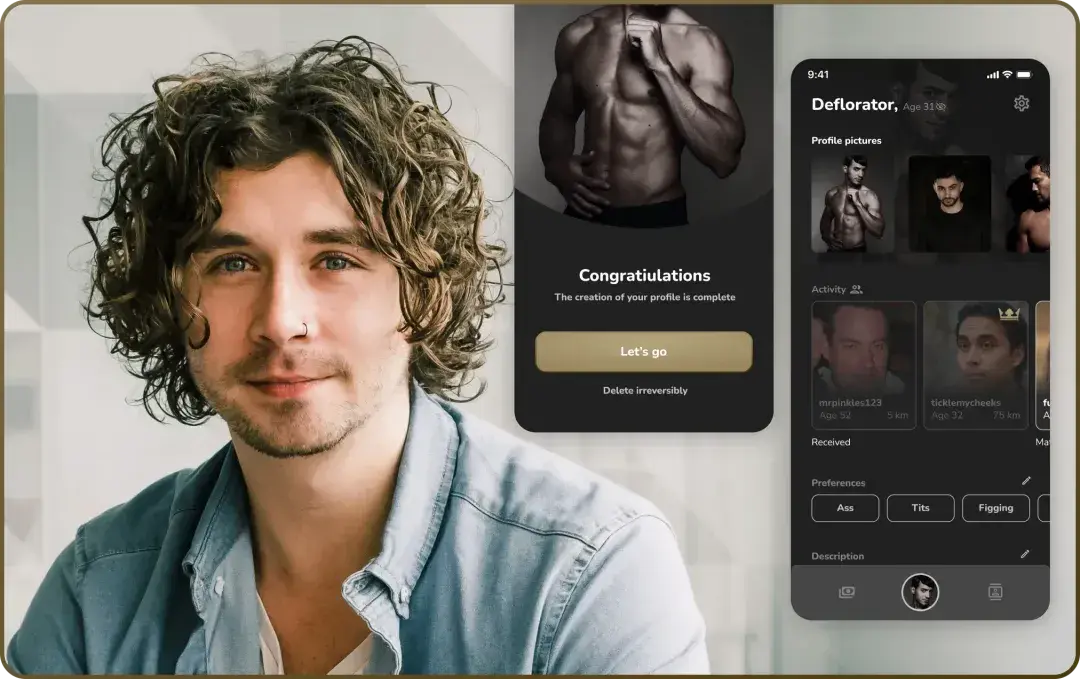
We built a social dating app that balances intelligence, safety, and simplicity. All systems—matching, chat, monetization—were designed to be trust-first, growth-second.
Explainable AI-Powered Matching
The core of the platform is an AI-powered matchmaking engine that evaluates profiles using interests, interaction patterns, intent signals, and activity quality.
Instead of hiding everything, the user matching algorithm surfaces gentle context—why a profile is relevant, what signals align—so users feel informed rather than manipulated. This transparency plays a key role in the overall dating platform development strategy.
Secure Real-Time Chat With Built-In Safeguards
Messaging uses encrypted, WebSocket-based real-time communication to keep conversations fast and responsive. Safety tools like reporting, blocking, and media controls are integrated directly into the flow.
Moderation hooks allow intervention when needed without disrupting the real-time chat dating app experience. This keeps users protected while preserving natural conversation dynamics.
Swipe-Based Discovery Guided By Intent
The familiar swipe-based dating app pattern remains central but is enhanced with intent-aware ranking. Verified users, consistent activity, and mutual signals influence who appears in the feed.
This reduces noise and highlights profiles more likely to lead to real conversations, improving engagement and dating app user retention over time.
Intent-Based Monetization Model
Instead of upfront subscriptions, the app uses a pay-for-connection model. Users pay only when interest is mutual, discouraging spam and keeping early interactions accessible.
This dating app monetization approach works especially well for a dating app MVP, allowing the platform to grow trust before introducing heavier monetization layers.
Privacy-First Profile And Data Design
Profiles are built with data minimization in mind. Users control visibility, consent is explicit, and private modes allow interaction without overexposure.
These choices reinforce Amor’s Secret as a privacy-focused dating app, directly impacting user comfort, trust, and long-term retention.
Scalable Foundation For Growth
Behind the scenes, the dating app architecture supports growth across regions and user segments. Matching models can evolve, moderation rules can adapt, and monetization strategies can expand—without breaking the core experience.
Platform Architecture
The architecture balances speed, safety, and cross-platform reach.
- Mobile: React Native for cross-platform delivery
- Web: React for landing and web onboarding
- Backend: Node.js/NestJS for matchmaking services, notifications, and payments
- Database: PostgreSQL for profiles, matches, and subscriptions
- Cache & Queues: Redis and RabbitMQ for real-time chat routing and feed updates
- AI/ML: Matching and ranking models to tune the user matching algorithm
- Messaging: Secure WebSocket-based real-time chat with moderation hooks
- Payments: Stripe-based intent-triggered billing for fair monetization
- Infrastructure: AWS with CI/CD and observability for reliable releases
Outcomes
The dating app development effort led to higher trust, stronger engagement, and better retention. Transparent matching signals and verification tools significantly reduced fake profiles and improved match quality. Secure real-time chat and built-in safety features lowered abuse reports while increasing session depth.
Intent-based monetization improved conversion without hurting early adoption. Privacy-first design choices positively impacted user feedback around safety and comfort. As usage grew, the dating app architecture maintained performance across regions, keeping swipe interactions fast and chat delivery reliable. The result is a scalable dating app that feels modern, respectful, and easy to use.
MVP Development Team is part of Idealogic Group, delivering social and mobile builds with shared engineering standards, security practices, and delivery playbooks. For details on how we handle data and collaborations, see our Privacy Policy.
Hear From Our Client Directly
★ ★ ★ ★ ★
"This team has always proven to be a reliable partner with profound experience in the industry and great attention to our project. I would like to take the opportunity to not only endorse our development team but also to thank everyone involved, who was passionate about our idea and helped us make it happen. Thank you."
Philipp Tanglmayer, CEO at Tharsesis AG
Summary
This dating app case study shows that matchmaking app development does not have to trade trust for growth. By focusing on AI-powered matchmaking, secure real-time chat, and intent-based monetization, the team delivered a scalable dating app MVP that users feel comfortable returning to.
For teams planning a dating platform development roadmap, the takeaway is simple: make matching understandable, protect conversations by default, and monetize real intent instead of basic access. That foundation strengthens dating app user retention and supports sustainable growth over time.
Techstack
Our implementation uses a scalable, privacy-first stack for dating app development.
| Area | Technology |
|---|---|
| Mobile | React Native |
| Web | React |
| Backend | Node.js, NestJS |
| Database | PostgreSQL |
| Cache & Queues | Redis, RabbitMQ |
| AI/ML | Matching and ranking models |
| Messaging | WebSocket-based secure real-time chat |
| Payments | Stripe intent-based billing |
| Infrastructure | AWS, CI/CD pipelines |
| CMS | Strapi for content and moderation |