Binance Smart Chain GameFi Platform — Blockchain Game
A play-to-earn blockchain game on Binance Smart Chain with wallet integration, token-based rewards, AI-powered game analytics, and smart contract-powered transparency.

The Origin of IGames
This is a blockchain game available for play-to-earn on the Binance Smart Chain. It features wallet integration, token-based rewards, AI-powered game analytics, and transparent smart contracts.
IGames started with a practical question: can a play-to-earn blockchain game actually be fair, not just claim to be? The team wanted to build a real example of Web3 game development where players could clearly see how rewards work and why outcomes happen the way they do.
The outcome was a play-to-earn blockchain game on Binance Smart Chain in which each round begins via wallet integration using MetaMask and all game logic lives inside the smart contracts. No hidden switches, no manual overrides. The goal was not to ship another hype project, but to build a trustworthy GameFi platform on BSC that players can actually use.
This Binance blockchain game case study explains where typical crypto game development projects fall short, how we approached smart contract development for games, and what it took to launch a GameFi MVP that feels transparent, social, and reliable.
Challenges in the Market
The Web3 gaming space was busy, but most products followed the same path. Referral-heavy mechanics rewarded promotion over actual gameplay, and payout rules were often unclear with no easy way for players to check how rewards were calculated. Play-to-earn, move-to-earn, and NFT drops were split across different products, forcing players to juggle interfaces, balances, and wallets. Some payouts depended on centralized systems, leading to higher fees and slow settlement that undermined secure blockchain transactions for crypto games.
What was missing was a single crypto gaming platform with clear rules, low friction, and an open token-based game economy that did not depend on marketing tricks.
Resolutions
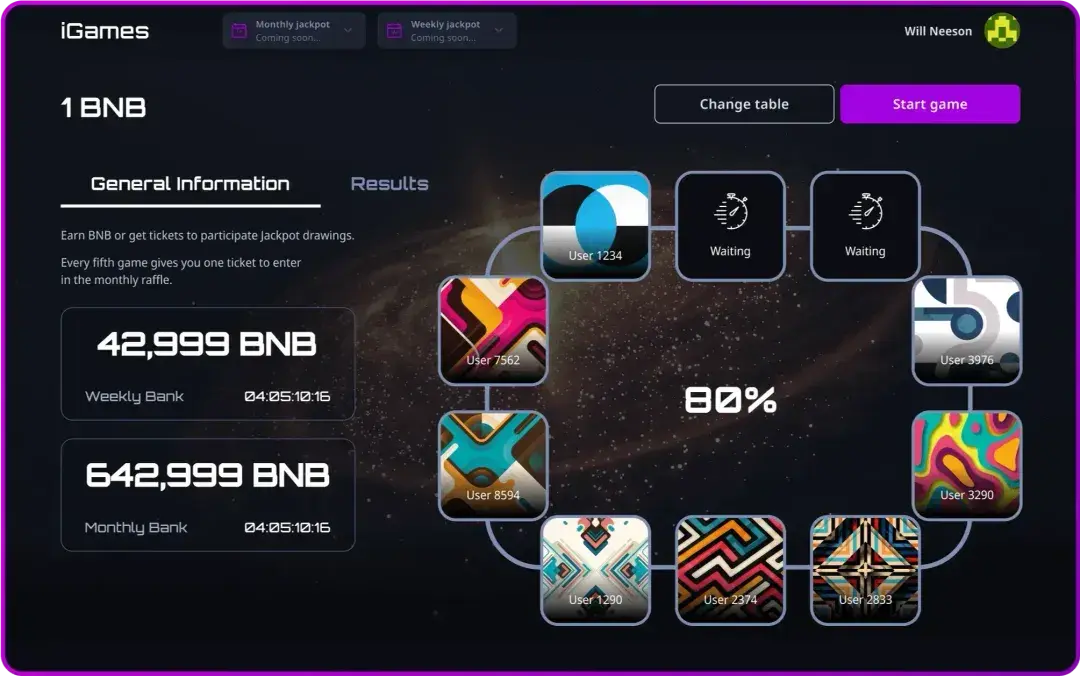
We restructured the reward model to make earnings participation-based rather than referral-based. Using smart contract development for games on Binance Smart Chain, we encoded a fixed 70/30 win ratio directly into the contract. All payouts are on-chain and publicly verifiable. Wallet integration for games became the natural entry point: players connect with MetaMask, start a round, and the smart contract handles execution and settlement without manual steps.
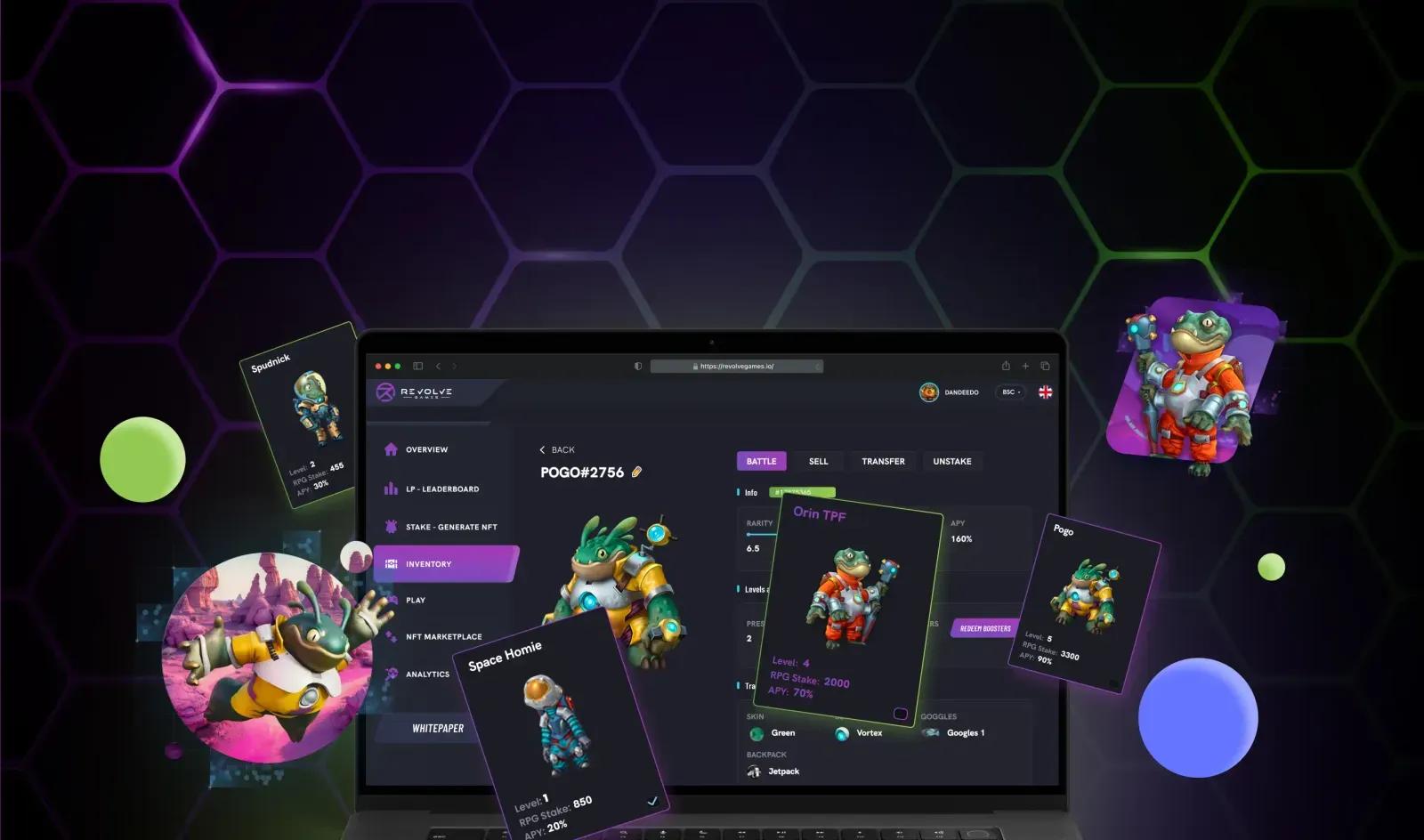
Instead of features divided across products, play-to-earn, move-to-earn, and NFT mechanics were integrated into one continuous flow. With NFT marketplace integration, game assets and collectibles stay connected to gameplay rather than living in separate systems. All transactions run on BSC, keeping fees low and confirmations fast while maintaining secure blockchain transactions. AI-powered game analytics monitor reward distribution, detect abuse patterns, and track token circulation so the blockchain gaming platform can scale without breaking the economy.
Outcome
Once IGames launched, players immediately knew how the system worked: outcomes are determined by smart contracts, not a platform operator. That clarity reduced onboarding friction and encouraged repeat play. Lower Binance Smart Chain fees made it easy to move between rounds, which improved retention and session depth. AI-powered game analytics helped identify early issues around reward loops and potential exploitation, keeping the token-based game economy stable. Most importantly, players who were ignored by referral-driven platforms finally had a fair path to participate. Trust developed organically, and so did the community—without artificial incentives.
Summary
IGames is a clear example of what blockchain game development looks like when transparency actually matters. Instead of splitting features across different products, the team brought play-to-earn, NFT, and move-to-earn mechanics into one Web3 gaming solution. Leaning on Binance Smart Chain keeps transactions fast, cheap, and verifiable.
The key takeaway is simple: trust self-organizes when players can see the rules, follow rewards on-chain, and verify what they own. For blockchain gaming startups, IGames shows a practical way to launch a GameFi MVP on BSC without relying on hype, referrals, or unclear mechanics—and it shows how AI-powered game analytics can keep an on-chain economy balanced.
Techstack
Our implementation uses a scalable Web3 stack built for play-to-earn on BSC.
| Area | Technology |
|---|---|
| Smart contracts | Solidity, OpenZeppelin |
| Blockchain | Binance Smart Chain (BSC) |
| Frontend | React, Next.js |
| Backend | Node.js, NestJS |
| Database | PostgreSQL |
| Cache | Redis |
| Analytics/AI | Custom AI-powered game analytics services |
| Infrastructure | AWS |
| Wallets | MetaMask integration |
| NFT/Marketplace | ERC-721/1155, marketplace integration |
| DevOps | Docker, CI/CD on GitHub Actions |