MVP vs. Full-Scale Product: Understanding the Key

On this page
- Introduction
- What is a Minimum Viable Product (MVP)?
- Why Start with an MVP? The Benefits
- What is Full-Blown Product Release?
- MVP vs. Full Product: A Detailed Comparison
- When Does Full-Scale Development Make Sense?
- MVP to Full Product Release - When is it Time?
- Conclusion: Which type of development should you choose
Introduction
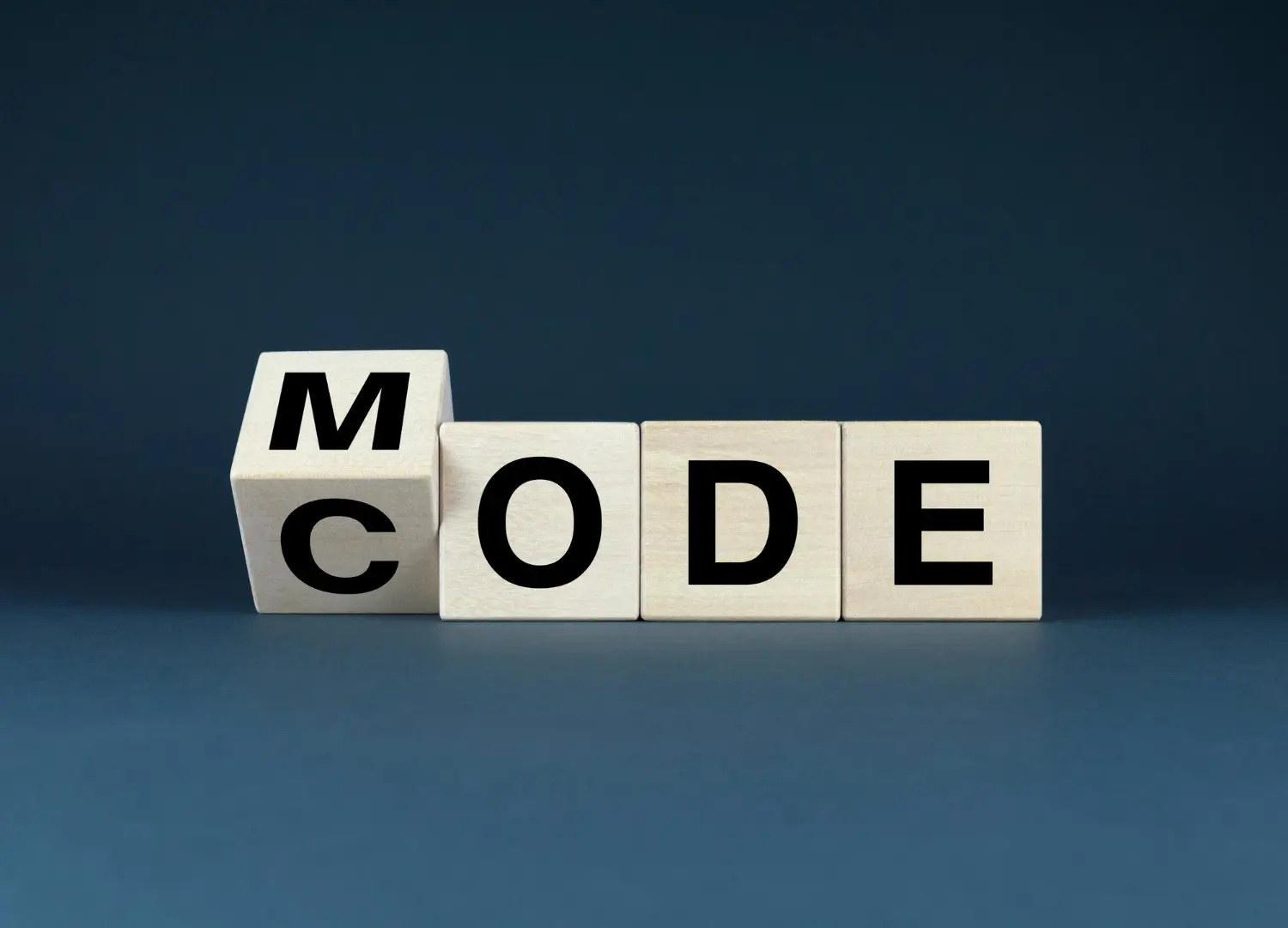
It is very exciting and difficult to start up or introduce a new product. This is one of the biggest initial choices that you will make in life; to create the Minimum Viable Product (MVP) or to launch a full-scale product release. This option has implications on time to market, budget, risk and speed at which you can learn users. Within this article, we are going to describe the meaning of each approach, their pros and cons, and how to choose the most suitable one in your case of a startup.
The choice between MVP and full-scale product development can make or break your startup's success. Understanding both approaches is crucial for making an informed decision.
What is a Minimum Viable Product (MVP)?
Explaining MVP
An MVP is the simplest version of your product that entails the basic features just enough to address one of the fundamental issues of your users. It is an inexpensive and fast-built product to introduce a functional product to early adopters. An MVP is not meant to be a flawless solution but to measure whether your idea is sound and receive feedback about the actual users. This will assist you to figure out what is working and then invest more.
The main features of an MVP
- It has only the bare minimum features
- It is built to launch fast
- It is also economical to design and develop
- It is used to figure out the product-market fit
Prior to the development of the actual application, Dropbox developed a straightforward explainer video to demonstrate the product idea.
Why Start with an MVP? The Benefits
Cost-Efficiency
Cost control is one of the strongest arguments to launch with an MVP. The startups typically are run on meager financial resources, particularly during the early phases. With an MVP, the teams can spend their budget efficiently since they can only consider the necessary features and do not spend on complex features that may not be required at the present time. This is lean product development which will save time and money wasting on assumptions and can only validate the idea before full scale investment is committed. It also leaves space to experiment, fail quicker, and refine - but without the large expense of a developed solution.
Quickened Time to Market
Speed is a must in the current competitive digital environment. MVP enables you to go through the idea and launch in a few weeks, as opposed to months or years. You can move to the market in a short time and start getting actual user information by launching a product that satisfies only the critical needs of your target audience. This is a threefold benefit of this early release as well as it does not only fast track your learning process but also allows you to put your niche name on the map before your competitors are able to cut through. First, even with a bare-bones version, can be better in too many instances than launching later with a flawless product.
Risk Mitigation
Each new idea of the product involves a degree of uncertainty. Will users care? Will they pay for it? Is it a real problem you are working on? It is a gamble to launch a complete product without answering such questions. An MVP is a tool that allows minimizing that risk by getting a true, working version of your product in front of real users. Their responses, actions and usage patterns provide you with insight as to whether your value proposition is working. In case, the answer is in the negative or is a lukewarm, you are able to change, bend and even drop the concept without wasting months of development and a substantial budget.
User-Centric and iterative development
MVP puts users first in the development of your product. When you gather feedback frequently and at a young age, you are able to iterate on the real needs and not assumptions. This is the refinement process that is driven by the user hence guaranteeing that the end product that you create has a higher chance of being useful, desirable and commercially viable. To develop a product, rather than working in empty space, your team works directly with early adopters: oftentimes your most loyal users, to co-create an improved product over time. The iterative process also promotes innovation and will make you react more quickly to the changes in the market.
Stresses Product-Market Fit
Maybe the most important reason to start with an MVP is the chance to test product-market fit. To do so, is to have a solution that is responsive to a real and pressing problem to a specified audience. This is because by launching early and testing with real users, you can verify whether your assumptions concerning the market, the pain point, and the solution are correct. This not only helps to inform your product roadmap but also helps to attract investors, get partnerships and comfortably expand your operations.
Ready to Build Your MVP?
Start validating your product idea today with a cost-effective MVP approach.
Get StartedWhat is Full-Blown Product Release?
Defining the Full Product
A full product release is a full version which provides all the planned capabilities and a refined user experience. It is the last product you bring out when you are confident enough on your idea and have the capability of serving a broader market.
Main Characteristics of a Full Product
- Every essential and additional feature available
- Quality design and user experience (UX/UI)
- Scalable technology to support growth
- Tested to be reliable
- Developed to work on a large scale (many months or more) with budget requirements that range from hundreds of thousands of dollars to millions of dollars depending on the complexity
It also requires a complete development team.
MVP vs. Full Product: A Detailed Comparison
| Feature | MVP | Full-Scale Product |
|---|---|---|
| Purpose | Test idea | Deliver full solution |
| Features | Core only | All planned features |
| Development Time | Weeks to months | Months to years |
| Budget | $10k–$150k AUD | $150k–$1M+ AUD |
| Risk | Lower | Higher |
| Scalability | Limited | Designed to scale |
| Target Audience | Early adopters | Broad market |
| User Feedback | For improvement | For updates |
| Design | Basic | Polished |
When Does Full-Scale Development Make Sense?
Although MVPs are appropriate with most startups, in some situations a full product launch is preferable:
Proven Market Demand
When you are comforted beyond reasonable doubt that your solution is required, because of extensive market research, user surveys, successful pilot projects, or pre-orders, then you can consider a full product. In other words, when you are sure that your target customers are already spending time in spreadsheets or workarounds in their attempts to resolve an issue that your product is solving, that is an effective indicator. Under those circumstances, the role of MVP, which is to test demand, will have been served. Constructing the full version enables you to take advantage of legitimate opportunities in a short period of time.
Complex Products
There are products or SaaS platforms that are so intertwined that they cannot be divided into basic versions. Imagine financial platforms or enterprise blockchain or AI-based tools that need to be fully functional on day one in order to provide value. Provided that the core features rely on each other to work effectively, launching a bare-minimum MVP can cause confusion to the users or even hurt your brand. Under these circumstances, a thorough launch might be needed to make it usable, trustworthy and long lasting.
Competitive Markets
Differentiation is essential when you are entering a saturated or high-speed industry, i.e. fintech, e-commerce, or health tech. It may not suffice to have a simple MVP when your solution is being compared to full-fledged solutions. The full-scale launch of a product with a great UX/UI, full functionality, and a support service can make your product stand out on day one. First impressions count in the crowded market and launching strong can make you gain the competitive advantage that will enable you to gain market share.
Budget and Team Ready
In case your startup has already raised capital, has an established in-house development team, or has a trusted technology partner, then you might be buffered to take and internalize the hazards involved in full product development. This arrangement enables increased planning, faster execution and enhanced quality assurance. Nonetheless, clear objectives, well-structured user personas as well as a product roadmap, which corresponds to long-term growth should still underpin this approach.
Even with adequate funding and team, rushing into full-scale development without proper validation can lead to expensive mistakes.
MVP to Full Product Release - When is it Time?
Assuming you use MVP, the following are the signs indicating that your time is up with it:
- Positive user feedback and engagement
- Steady user growth and retention
- Business model and revenue confirmation
- Strong and growing market demand
- Your technology is scalable
Conclusion: Which type of development should you choose
Choosing between MVP and full product is a big decision that will determine the future of your startup. MVP works well in testing the ideas at a low cost and a complete product would perform well in the well-tested concepts willing to compete in the market. It is always remembered that the superior products thrive by paying close attention to the users and changing accordingly.
New to these concepts? Our glossary breaks down Product-Market Fit, Go-to-market Strategy and Minimum Viable Product.
Tags
Introduction
It is very exciting and difficult to start up or introduce a new product. This is one of the biggest initial choices that you will make in life; to create the Minimum Viable Product (MVP) or to launch a full-scale product release. This option has implications on time to market, budget, risk and speed at which you can learn users. Within this article, we are going to describe the meaning of each approach, their pros and cons, and how to choose the most suitable one in your case of a startup.
The choice between MVP and full-scale product development can make or break your startup's success. Understanding both approaches is crucial for making an informed decision.
What is a Minimum Viable Product (MVP)?
Explaining MVP
An MVP is the simplest version of your product that entails the basic features just enough to address one of the fundamental issues of your users. It is an inexpensive and fast-built product to introduce a functional product to early adopters. An MVP is not meant to be a flawless solution but to measure whether your idea is sound and receive feedback about the actual users. This will assist you to figure out what is working and then invest more.
The main features of an MVP
- It has only the bare minimum features
- It is built to launch fast
- It is also economical to design and develop
- It is used to figure out the product-market fit
Prior to the development of the actual application, Dropbox developed a straightforward explainer video to demonstrate the product idea.
Why Start with an MVP? The Benefits
Cost-Efficiency
Cost control is one of the strongest arguments to launch with an MVP. The startups typically are run on meager financial resources, particularly during the early phases. With an MVP, the teams can spend their budget efficiently since they can only consider the necessary features and do not spend on complex features that may not be required at the present time. This is lean product development which will save time and money wasting on assumptions and can only validate the idea before full scale investment is committed. It also leaves space to experiment, fail quicker, and refine - but without the large expense of a developed solution.
Quickened Time to Market
Speed is a must in the current competitive digital environment. MVP enables you to go through the idea and launch in a few weeks, as opposed to months or years. You can move to the market in a short time and start getting actual user information by launching a product that satisfies only the critical needs of your target audience. This is a threefold benefit of this early release as well as it does not only fast track your learning process but also allows you to put your niche name on the map before your competitors are able to cut through. First, even with a bare-bones version, can be better in too many instances than launching later with a flawless product.
Risk Mitigation
Each new idea of the product involves a degree of uncertainty. Will users care? Will they pay for it? Is it a real problem you are working on? It is a gamble to launch a complete product without answering such questions. An MVP is a tool that allows minimizing that risk by getting a true, working version of your product in front of real users. Their responses, actions and usage patterns provide you with insight as to whether your value proposition is working. In case, the answer is in the negative or is a lukewarm, you are able to change, bend and even drop the concept without wasting months of development and a substantial budget.
User-Centric and iterative development
MVP puts users first in the development of your product. When you gather feedback frequently and at a young age, you are able to iterate on the real needs and not assumptions. This is the refinement process that is driven by the user hence guaranteeing that the end product that you create has a higher chance of being useful, desirable and commercially viable. To develop a product, rather than working in empty space, your team works directly with early adopters: oftentimes your most loyal users, to co-create an improved product over time. The iterative process also promotes innovation and will make you react more quickly to the changes in the market.
Stresses Product-Market Fit
Maybe the most important reason to start with an MVP is the chance to test product-market fit. To do so, is to have a solution that is responsive to a real and pressing problem to a specified audience. This is because by launching early and testing with real users, you can verify whether your assumptions concerning the market, the pain point, and the solution are correct. This not only helps to inform your product roadmap but also helps to attract investors, get partnerships and comfortably expand your operations.
Ready to Build Your MVP?
Start validating your product idea today with a cost-effective MVP approach.
Get StartedWhat is Full-Blown Product Release?
Defining the Full Product
A full product release is a full version which provides all the planned capabilities and a refined user experience. It is the last product you bring out when you are confident enough on your idea and have the capability of serving a broader market.
Main Characteristics of a Full Product
- Every essential and additional feature available
- Quality design and user experience (UX/UI)
- Scalable technology to support growth
- Tested to be reliable
- Developed to work on a large scale (many months or more) with budget requirements that range from hundreds of thousands of dollars to millions of dollars depending on the complexity
It also requires a complete development team.
MVP vs. Full Product: A Detailed Comparison
| Feature | MVP | Full-Scale Product |
|---|---|---|
| Purpose | Test idea | Deliver full solution |
| Features | Core only | All planned features |
| Development Time | Weeks to months | Months to years |
| Budget | $10k–$150k AUD | $150k–$1M+ AUD |
| Risk | Lower | Higher |
| Scalability | Limited | Designed to scale |
| Target Audience | Early adopters | Broad market |
| User Feedback | For improvement | For updates |
| Design | Basic | Polished |
When Does Full-Scale Development Make Sense?
Although MVPs are appropriate with most startups, in some situations a full product launch is preferable:
Proven Market Demand
When you are comforted beyond reasonable doubt that your solution is required, because of extensive market research, user surveys, successful pilot projects, or pre-orders, then you can consider a full product. In other words, when you are sure that your target customers are already spending time in spreadsheets or workarounds in their attempts to resolve an issue that your product is solving, that is an effective indicator. Under those circumstances, the role of MVP, which is to test demand, will have been served. Constructing the full version enables you to take advantage of legitimate opportunities in a short period of time.
Complex Products
There are products or SaaS platforms that are so intertwined that they cannot be divided into basic versions. Imagine financial platforms or enterprise blockchain or AI-based tools that need to be fully functional on day one in order to provide value. Provided that the core features rely on each other to work effectively, launching a bare-minimum MVP can cause confusion to the users or even hurt your brand. Under these circumstances, a thorough launch might be needed to make it usable, trustworthy and long lasting.
Competitive Markets
Differentiation is essential when you are entering a saturated or high-speed industry, i.e. fintech, e-commerce, or health tech. It may not suffice to have a simple MVP when your solution is being compared to full-fledged solutions. The full-scale launch of a product with a great UX/UI, full functionality, and a support service can make your product stand out on day one. First impressions count in the crowded market and launching strong can make you gain the competitive advantage that will enable you to gain market share.
Budget and Team Ready
In case your startup has already raised capital, has an established in-house development team, or has a trusted technology partner, then you might be buffered to take and internalize the hazards involved in full product development. This arrangement enables increased planning, faster execution and enhanced quality assurance. Nonetheless, clear objectives, well-structured user personas as well as a product roadmap, which corresponds to long-term growth should still underpin this approach.
Even with adequate funding and team, rushing into full-scale development without proper validation can lead to expensive mistakes.
MVP to Full Product Release - When is it Time?
Assuming you use MVP, the following are the signs indicating that your time is up with it:
- Positive user feedback and engagement
- Steady user growth and retention
- Business model and revenue confirmation
- Strong and growing market demand
- Your technology is scalable
Conclusion: Which type of development should you choose
Choosing between MVP and full product is a big decision that will determine the future of your startup. MVP works well in testing the ideas at a low cost and a complete product would perform well in the well-tested concepts willing to compete in the market. It is always remembered that the superior products thrive by paying close attention to the users and changing accordingly.
New to these concepts? Our glossary breaks down Product-Market Fit, Go-to-market Strategy and Minimum Viable Product.
Tags
On this page
- Introduction
- What is a Minimum Viable Product (MVP)?
- Why Start with an MVP? The Benefits
- What is Full-Blown Product Release?
- MVP vs. Full Product: A Detailed Comparison
- When Does Full-Scale Development Make Sense?
- MVP to Full Product Release - When is it Time?
- Conclusion: Which type of development should you choose